
As the world increasingly focuses on sustainability and energy conservation, new innovations continue to emerge that challenge the status quo of everyday products. One such product is the saltwater flashlight, an eco-friendly alternative to traditional battery-powered flashlights. But how do these saltwater LED torches actually work, and why are they gaining attention?
In this article, we’ll explore the science behind saltwater flashlights, how they operate, and why they are becoming a popular choice for eco-conscious consumers and outdoor enthusiasts. These flashlights use a saltwater solution as an electrolyte to power LED lights, providing an energy-efficient and environmentally friendly option for lighting in emergency situations or outdoor activities.
Let’s dive into the mechanics of saltwater flashlights and explore how they are revolutionizing the way we think about power sources. From the environmental benefits to their long-lasting performance, saltwater-powered lights offer a sustainable alternative to traditional flashlights.
The Science Behind Saltwater Flashlights
Saltwater lights operate on a unique and ingenious principle: they generate electricity through a metal-air electrochemical reaction, using saltwater as a key catalyst. Unlike traditional flashlights that rely on stored chemical energy in batteries, these devices produce power on demand by combining aluminum, oxygen from the air, and a saline solution.
A.The Electrochemical Power Generation Process
The core of a saltwater light's functionality is a galvanic cell reaction, not electrolysis. Here’s how it works:
1. Key Components: The system consists of a sacrificial aluminum alloy anode, an air-breathing cathode (typically made of a porous carbon-based material), and a saltwater electrolyte.
2. The Chemical Reaction:
At the aluminum anode, oxidation occurs: Aluminum reacts with hydroxide ions from the electrolyte, releasing electrons and forming aluminum hydroxide.
The freed electrons travel through the external circuit to power the LED light.
At the cathode, oxygen from the air dissolves into the saltwater and, using the electrons that have done their work, combines with water to form more hydroxide ions.
3. The Role of Saltwater: The saltwater (sodium chloride solution) serves as the electrolyte. It does not get “used up” or split to generate power. Instead, its ions (Na⁺ and Cl⁻) dramatically increase the solution's electrical conductivity, facilitating the efficient movement of charges to complete the internal circuit and sustain the reaction. The chloride ions also play a crucial role in preventing a passive oxide layer from stalling the reaction on the aluminum surface.
In summary: The aluminum slowly corrodes (oxidizes) in a controlled manner, and the energy from this reaction—facilitated by oxygen and enhanced by saltwater—is directly converted into electrical energy to produce light. This process is simple, reliable, and environmentally friendly, as it uses non-toxic, abundant materials and generates no harmful emissions, with the main byproduct being aluminum hydroxide.
B. Advantages of Using Saltwater as an Electrolyte
Eco-Friendly Power Source: Unlike traditional flashlights that rely on alkaline or lithium-ion batteries, which contribute to electronic waste and environmental pollution, saltwater-powered flashlights use a non-toxic electrolyte. Saltwater is naturally abundant and can be replaced easily, making it a sustainable solution for portable lighting needs.
No Need for Charging: One of the key benefits of saltwater flashlights is that they don’t require recharging like their battery-operated counterparts. Once you add saltwater to the flashlight, it will generate electricity for several hours, making it ideal for emergency situations where access to electrical outlets or fresh batteries may be limited.
Long Shelf Life: Saltwater flashlights have a long shelf life because they do not rely on rechargeable batteries that can degrade over time. Instead, the electrolyte used in saltwater flashlights remains effective for much longer periods. This makes them a reliable tool for survival kits, camping, or as a backup light source in case of power outages.
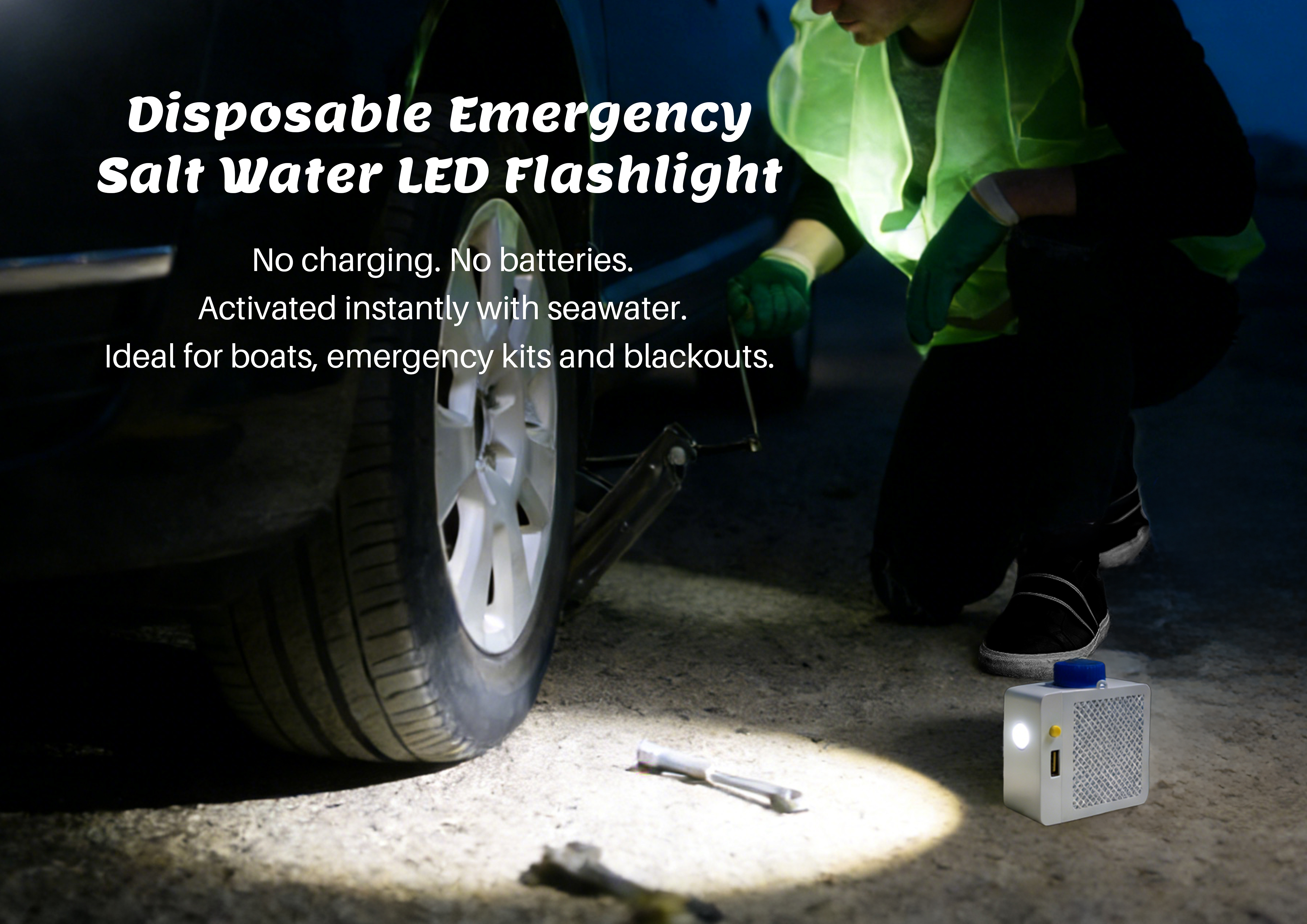
The Advantages of Saltwater Flashlights
As the world becomes increasingly aware of the importance of environmental sustainability and reducing our carbon footprint, consumers are more actively seeking eco-friendly products that contribute less harm to the planet. Saltwater flashlights have emerged as a groundbreaking solution, offering numerous advantages over traditional flashlights that rely on disposable batteries or electrical charging. These flashlights operate using saltwater as an electrolyte, which powers the flashlight through a simple and efficient electrolysis process. In this article, we will dive into the environmental benefits, cost-effectiveness, and portability of saltwater flashlights, demonstrating why they are not just a convenient lighting tool but also an innovative and responsible choice for consumers and businesses alike.
A. Environmental Benefits
The environmental advantages of saltwater flashlights are one of the key reasons why they are gaining popularity among eco-conscious consumers. With growing concerns about plastic pollution, harmful chemicals in traditional batteries, and electronic waste, saltwater flashlights provide an eco-friendly alternative that helps reduce environmental harm. Here are several critical reasons why saltwater flashlights are considered green technology:
Non-Toxic: Traditional batteries often contain heavy metals such as lead, mercury, and cadmium, which can be harmful to the environment when disposed of improperly. In contrast, saltwater flashlights use a harmless electrolyte made from saltwater, which is non-toxic and safe for the environment. There are no harmful chemicals involved in the flashlight’s operation, making it a safer option for both users and the planet.
Waste Reduction: One of the most significant environmental impacts of traditional flashlights is the battery disposal process. Batteries, particularly single-use ones, often end up in landfills, contributing to the growing problem of electronic waste. Saltwater flashlights eliminate the need for disposable batteries altogether, significantly reducing waste and contributing to a cleaner environment. With a rechargeable and reusable design, these flashlights help reduce the accumulation of plastic waste and toxic materials.
Sustainable Power Source: Unlike traditional batteries, which rely on finite resources like lithium or zinc, saltwater is a renewable resource. The power source of a saltwater flashlight is as sustainable as it is effective. The electrolyte used in the flashlight can be replenished indefinitely, providing a sustainable energy solution that doesn’t depend on the extraction of raw materials or energy-intensive production processes. This makes saltwater flashlights a more responsible and eco-friendly option compared to conventional battery-powered lights.
B. Cost-Effectiveness
The financial savings offered by saltwater flashlights are another significant advantage, especially for those who use flashlights frequently or for extended periods. Traditional flashlights typically require frequent battery replacements, which can add up over time. On top of that, rechargeable flashlights still require electrical charging and may lose their ability to hold a charge over time, necessitating expensive replacements.
In contrast, saltwater flashlights only require saltwater to operate. The cost of refilling the flashlight with saltwater is minimal compared to purchasing new batteries, making it an affordable alternative. Saltwater is a renewable resource that’s easily accessible, and refilling a saltwater flashlight is a simple process that doesn’t require special equipment or materials.
C. Portability and Ease of Use
Saltwater flashlights are incredibly portable and easy to use, just like traditional LED flashlights. Their design is simple, with no complicated setup or need for charging cables. The operation is straightforward: you simply fill the flashlight’s chamber with water and salt, and the electrolysis process powers the LED light, providing a reliable and consistent light source.
Applications of Saltwater Flashlights
Saltwater flashlights are versatile tools with a wide range of applications, from emergency preparedness to outdoor adventures. Here are some key uses for these innovative flashlights:
A. Emergency Preparedness
In emergency situations such as power outages or natural disasters, having a reliable light source can be a matter of safety. Saltwater flashlights are an excellent addition to any emergency kit because they require no charging and have an extended shelf life. They can be used when you need light but have no access to fresh batteries or a power supply.
B. Outdoor Activities
Outdoor enthusiasts such as campers, hikers, and survivalists can benefit from saltwater flashlights because they are lightweight, durable, and provide a reliable light source in remote locations. Their ability to run for hours without requiring recharging or new batteries makes them perfect for extended outdoor trips.
C. Backup Lighting for Homes and Offices
Saltwater flashlights make for great backup lighting in homes and offices, especially in areas where power interruptions are common. Keeping a saltwater-powered flashlight on hand ensures that you always have a source of light in case the power goes out.
Conclusion
Saltwater flashlights are a remarkable innovation in the world of portable lighting. By using a saltwater solution as the electrolyte to generate electricity, these flashlights offer an eco-friendly, cost-effective, and sustainable alternative to traditional battery-operated lights. Whether you're looking for a reliable tool for outdoor adventures, an emergency backup light, or an environmentally conscious lighting solution, saltwater flashlights deliver outstanding performance.
With no need for batteries, minimal environmental impact, and a simple, efficient design, these flashlights are ideal for anyone seeking a more sustainable and reliable lighting solution. At www.chredsun.com, we offer top-quality saltwater flashlights designed for durability, ease of use, and long-lasting performance. Contact us today for more information and to explore our range of innovative products.
FAQ Section
How does a saltwater flashlight work?
A saltwater flashlight works by using a saltwater solution as the electrolyte to generate electricity through electrolysis, which powers the flashlight’s LED light.
How long can a saltwater flashlight run?
A saltwater flashlight can run for several hours on a single charge of saltwater, depending on the model and usage.
Are saltwater flashlights safe to use?
Yes, saltwater flashlights are completely safe to use. The saltwater electrolyte is non-toxic, and the flashlights are designed to be easy to handle with no harmful chemicals involved.
Can I use saltwater flashlights for camping?
Yes, saltwater flashlights are excellent for camping, as they are lightweight, durable, and do not require recharging or new batteries, making them ideal for outdoor activities.

 English
 العربية
 Français
 Русский
 Español
 Português
 Deutsch
 italiano
 日本語
日本語 한국어
한국어 Nederlands
 Tiếng Việt
 ไทย
ไทย Polski
 Türkçe
 አማርኛ
አማርኛ ພາສາລາວ
 ភាសាខ្មែរ
 Bahasa Melayu
 ဗမာစာ
ဗမာစာ தமிழ்
தமிழ் Filipino
 Bahasa Indonesia
 magyar
 Română
 Čeština
 Монгол
 қазақ
қазақ Српски
 हिन्दी
 فارسی
فارسی Kiswahili
 Slovenčina
 Slovenščina
 Norsk
Norsk Svenska
 українська
 Ελληνικά
 Suomi
Suomi Հայերեն
 עברית
עברית اردو
اردو Afrikaans
 Gaeilge
 नेपाली
 Aymara
 Беларуская мова
 guarani
 Krio we dɛn kɔl Krio
 Runasimi
 Wikang Tagalog


