Introduction
In many remote corners of the globe, the sun setting doesn't just mark the end of the day; it marks the end of productivity, education, and safety. For millions living in rural and off-grid communities, traditional lighting solutions are either non-existent, expensive, or dangerous. Kerosene lamps, while common, pose significant fire risks and emit toxic fumes. This is where the Salt Water Lamp emerges as a revolutionary alternative.
By utilizing a simple chemical reaction between salt, water, and metal plates, this technology provides a reliable light source without needing a power grid or expensive batteries. It is more than just a gadget; it is a lifeline. In this guide, we will explore why the Salt Water Lamp is the most viable lighting solution for off-grid living, focusing on its durability, ease of use, and its ability to transform lives through sustainable energy.
How Salt Water Technology Solves the Off-Grid Power Gap
The fundamental problem for rural communities is the lack of infrastructure. Solar power is great but requires high upfront costs and clear skies. A Salt Water Lamp operates on a different principle: galvanic cell science. It creates electricity through a chemical reaction, meaning it works 24/7, rain or shine.
The Science of Brine Power
Inside the unit, two different metals (usually magnesium and carbon or copper) act as electrodes. When you add a saline solution—literally salt mixed with water—it acts as an electrolyte. This triggers a flow of electrons, powering the LED bulbs. For a community near the ocean, the fuel is essentially free. Even in inland areas, common table salt is far cheaper and easier to transport than gasoline or heavy lead-acid batteries.
Reliability in Remote Areas
Unlike solar panels that might break or get covered in dust, a Portable salt water lamp is self-contained. It doesn't need to "charge" under the sun for eight hours to provide light at night. As long as you have the basic ingredients, you have instant illumination. This reliability makes it the primary choice for emergency responders and families in typhoon-prone regions where the grid is frequently destroyed.
Portability and Versatility for Daily Rural Activities
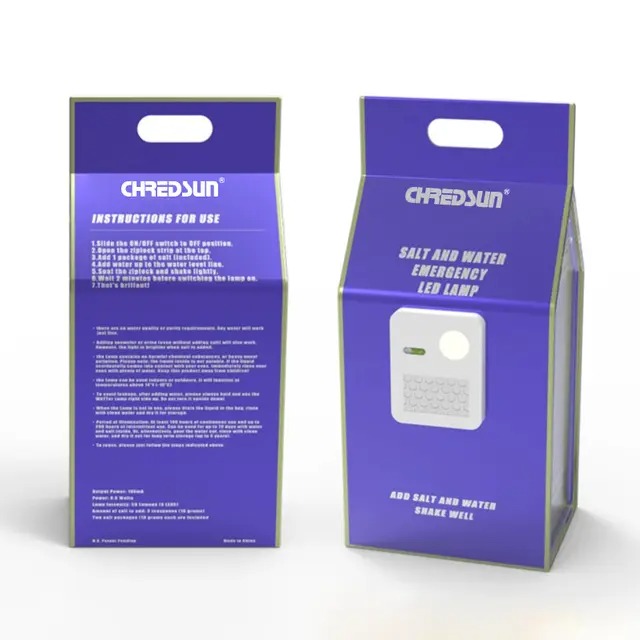
Life in rural communities involves movement. Farmers need to check crops at night, fishermen need to prep nets before dawn, and children need to move between rooms to study. A Portable salt water lamp is designed with these specific "user journeys" in mind.
Lightweight and Ergonomic Design
Traditional off-grid lighting is often bulky. Old-fashioned lanterns are heavy and hot to the touch. In contrast, a modern Portable salt water lamp uses lightweight, high-impact plastics. It usually features a sturdy handle, allowing it to be carried easily or hung from a hut's rafters. Because it produces no heat, it is safe to keep near bedding or paper schoolbooks.
Adapting to Different Lighting Needs
Not every task requires the same amount of light. A child studying needs focused, bright light, while a family eating dinner might prefer a softer glow to conserve the metal electrodes. This is why a Salt Water Lamp with dimmer switch is such a critical innovation. It allows users to control the output, directly extending the life of the magnesium rod. By dimming the light, a family can make their "fuel" last significantly longer, which is vital when resources are scarce.
Durability Standards: The Heavy Duty Requirement
In a rural environment, equipment faces mud, rain, humidity, and accidental drops. A flimsy plastic toy won't last a week. Procurement officers for NGOs and local governments must look for a Salt Water Lamps that can withstand these environmental pressures.
Built to Last in Harsh Climates
A Salt Water Lamps is often built with reinforced outer shells. These casings protect the internal circuitry from physical shocks. Furthermore, since the lamp uses water, it must be Waterproof to prevent internal corrosion of the wires. An IPX-rated Waterproof salt water lamp ensures that even if it is left out in a tropical downpour, it will continue to function.
| Feature | Standard Model | Heavy Duty Model |
| Casing Material | Standard ABS Plastic | Reinforced Polycarbonate |
| Water Resistance | Splash-proof | IP65+ Waterproof |
| Electrode Life | 100-150 Hours | 250+ Hours |
| Impact Resistance | Low | High (Drop-tested) |
Longevity of Components
The only "consumable" in this system, besides salt and water, is the metal electrode. In a Heavy duty setup, these rods are thicker, providing hundreds of hours of light before needing a simple replacement. This modularity means the lamp body stays out of the landfill for years, making it a truly sustainable investment for the community.
Large-Scale Lighting for Community Spaces
While individual lanterns are great for homes, rural communities also need "anchor" lighting for shared spaces like clinics, community centers, and schools. A Large salt water lamp system can act as a localized power station.
Transforming Community Infrastructure
Powering Public Safety
A Large salt water lamp can be designed to illuminate a wide radius. In off-grid villages, a central light source in a public square can reduce crime and allow for evening markets. These larger units often feature multiple USB ports, allowing villagers to charge mobile phones—their only link to weather updates and market prices—while the light is running.
Education and Healthcare Support
In a rural clinic, a Large salt water lamp provides the consistent light needed for nighttime medical emergencies. Since it produces no fumes, it doesn't contaminate the sterile environment like a kerosene lamp would. Similarly, in schools, these units can provide enough light for an entire classroom, enabling adult literacy programs to run after the workday ends.
Bridging the Gap Between Function and Modern Decor
While the primary focus is rural utility, the Salt Water Lamp is also finding a place in "glamping" and eco-conscious homes. This has led to designs that blend high-tech utility with modern decor aesthetics.
Aesthetic Appeal Meets Utility
A Salt Water Lamp with modern decor features can fit into a stylish off-grid cabin or a coastal home. Developers are using brushed metals, sleek transparent tanks, and warm-toned LEDs. This "crossover" appeal is important because higher sales in the luxury/outdoor market drive down production costs, eventually making the lamps cheaper for the rural communities that need them most.
The Dimmer Switch: A Luxury and a Necessity
The integration of a dimmer switch is a perfect example of this crossover. In a modern decor setting, it provides "mood lighting." In a rural setting, it is a survival feature for energy management. It shows that good design doesn't have to be sacrificed for functionality. A Salt Water Lamp can look good on a mahogany desk and still be rugged enough for a mountain trek.
Environmental Impact: Why Salt Water Beats Batteries
Traditional flashlights rely on Lithium-ion or Lead-acid batteries. In rural areas, there is no recycling infrastructure for these. When they die, they are thrown into pits or rivers, leaking heavy metals into the water supply.
A Greener Life Cycle
The "waste" from a Salt Water Lamp is essentially salt water and a non-toxic metal oxide. It is much more Eco-friendly than any battery-operated device.
No Charging Needed: It doesn't rely on the carbon-heavy manufacturing of massive solar arrays.
Low Carbon Footprint: The materials are often recyclable.
Non-Toxic: Safe for disposal in remote environments.
Reducing Kerosene Dependency
Every Salt Water Lamp deployed replaces a kerosene lantern. This significantly reduces carbon dioxide emissions and prevents respiratory illnesses in children. For NGOs, this represents a double win: providing light and improving public health simultaneously.
Comparative Analysis: Lighting Solutions for Off-Grid Living
To understand why a Salt Water Lamp is the winner, we must compare it to the current "competitors" in the off-grid market.
| Feature | Kerosene Lamp | Solar Lantern | Salt Water Lamp |
| Operating Cost | High (Fuel) | Zero | Very Low (Salt/Plate) |
| Safety | Dangerous (Fire) | Safe | Very Safe |
| Energy Source | Fossil Fuel | Sunlight | Chemical Reaction |
| Daytime Use | Yes | No (Must Charge) | Yes |
| Weather Reliance | None | High (Needs Sun) | None |
| Durability | Fragile (Glass) | Variable | Heavy duty |
As the table shows, the Salt Water Lamp provides a level of independence that solar cannot match, especially in forested or rainy regions where sunlight is inconsistent.
Implementation Strategy for Rural Development
If you are a procurement officer or a community leader, how do you successfully deploy this technology? It isn't just about handing out lamps; it is about education.
Training and Maintenance
Communities need to know how to mix the correct salt-to-water ratio (usually about 3% to 5% salinity, similar to seawater). They also need to be taught how to clean the electrodes to prevent "passivation," where a layer of oxidation slows down the reaction.
Localized Fuel Sources
The beauty of the Salt Water Lamp is that "fuel" can be found locally.
Ocean Water: Direct use for coastal villages.
Brine Springs: Common in many inland rural areas.
Table Salt: Cheap and non-perishable.
Urine: In extreme survival situations, human urine can act as the electrolyte to keep a Portable salt water lamp running.
Conclusion
The Salt Water Lamp is a testament to the power of simple, sustainable science. By addressing the specific needs of rural and off-grid communities—durability, ease of use, and low operating costs—it offers a path out of "energy poverty." Whether it is a Heavy duty model for a fishing boat or a Portable unit for a student's desk, this technology is lighting up the world one glass of salt water at a time. It is safe, Waterproof, and ready to meet the challenges of the most remote places on Earth.
FAQ
Q1: How long does a Salt Water Lamp last on one fill?
Typically, one "charge" of salt water can provide light for 8 to 12 hours. After that, you simply pour out the old water, rinse the tank, and add fresh brine.
Q2: Are the metal plates expensive to replace?
No. Replacing the magnesium anode is very affordable. Depending on usage, one rod can last for several months of daily lighting. Most Portable models are designed for "tool-free" replacement.
Q3: Can it charge my phone?
Many Large and Heavy duty models come equipped with a 5V USB output. While it won't charge as fast as a wall outlet, it is perfect for emergency power in off-grid situations.
Our Manufacturing Strength and Commitment
At our factory, we don't just assemble products; we engineer solutions for the real world. We operate a high-capacity manufacturing facility where precision meets purpose. Our team utilizes advanced molding and sonic welding techniques to ensure every Salt Water Lamp we produce is genuinely Waterproof and Heavy duty. We take pride in our rigorous quality control, testing our units against the humidity and heat typical of the rural areas where they are needed most.
Our strength lies in our ability to scale. Whether you are a small eco-shop looking for a modern decor piece or an international NGO requiring thousands of Portable units for disaster relief, we have the production power to deliver. We are committed to a "Zero-Failure" philosophy because we know that in an off-grid village, a broken lamp isn't just a minor inconvenience—it's a return to darkness. We stand behind our technology, and we invite you to partner with us in lighting the way toward a more sustainable and equitable future.

 English
 العربية
 Français
 Русский
 Español
 Português
 Deutsch
 italiano
 日本語
日本語 한국어
한국어 Nederlands
 Tiếng Việt
 ไทย
ไทย Polski
 Türkçe
 አማርኛ
አማርኛ ພາສາລາວ
 ភាសាខ្មែរ
 Bahasa Melayu
 ဗမာစာ
ဗမာစာ தமிழ்
தமிழ் Filipino
 Bahasa Indonesia
 magyar
 Română
 Čeština
 Монгол
 қазақ
қазақ Српски
 हिन्दी
 فارسی
فارسی Kiswahili
 Slovenčina
 Slovenščina
 Norsk
Norsk Svenska
 українська
 Ελληνικά
 Suomi
Suomi Հայերեն
 עברית
עברית اردو
اردو Afrikaans
 Gaeilge
 नेपाली
 Aymara
 Беларуская мова
 guarani
 Krio we dɛn kɔl Krio
 Runasimi
 Wikang Tagalog


