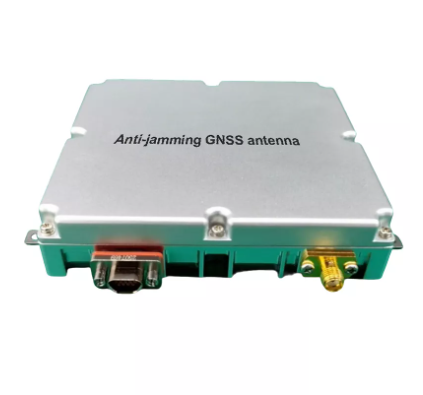
Introduction
In a world increasingly dependent on satellite navigation, interruptions like jamming and spoofing pose significant threats. How can we ensure GPS systems remain reliable under such conditions?
Enter the CRPA antenna, a key solution in the battle against interference. In this article, we will discuss what a 4-element CRPA antenna is, how it works, and its importance in maintaining accurate, uninterrupted GNSS signals.
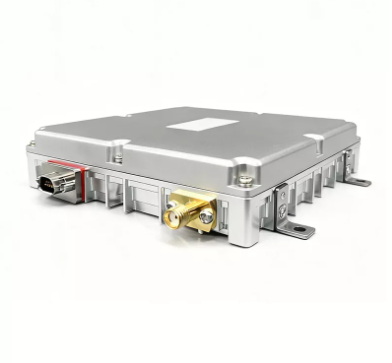
Basics of CRPA: Function and Technology Overview
What is a CRPA Antenna?
A CRPA antenna, or Controlled Reception Pattern Antenna, is an advanced and specialized antenna system used primarily in GNSS (Global Navigation Satellite Systems). It is designed to counteract interference from jammers and spoofers, which can manipulate or block satellite signals. Unlike traditional antennas that indiscriminately receive signals from all directions, CRPAs are highly dynamic. They adjust their reception patterns in real-time to focus on legitimate GNSS signals while suppressing unwanted interference from all other directions.
CRPAs are vital in environments where reliable GNSS reception is crucial but also vulnerable to interference, such as military operations or high-density urban areas. The 4-element CRPA, specifically, strikes a balance between size, performance, and cost-effectiveness, making it an ideal choice for many smaller platforms.
How Does a CRPA Antenna Work?
CRPAs operate by employing advanced signal processing techniques such as beamforming and null-steering. These antennas typically consist of multiple elements arranged in a specific pattern, with each element receiving GNSS signals. The system then manipulates the signals received from each element by adjusting their phase and amplitude. This allows the antenna to create a highly focused reception pattern or beam directed at the GNSS satellites.
Simultaneously, the CRPA system introduces “nulls” in the directions of interference sources. This effectively cancels out the jammer’s signal while still maintaining a strong signal from the satellites. The system uses real-time processing to ensure that the antenna's beam remains focused on legitimate satellite signals, even if the position of the satellites or the interference sources changes.
For a more intuitive understanding, imagine a microphone array in a noisy room. The array can focus on sounds coming from a specific direction (e.g., a speaker) while ignoring background noise. In the same way, the CRPA focuses on satellite signals and rejects noise, ensuring reliable positioning even under heavy jamming conditions.
Why CRPA Antennas Are Important
CRPA antennas provide essential protection against jamming and spoofing, which can severely compromise the accuracy and reliability of satellite navigation systems.
With the growing reliance on GPS for military operations, autonomous vehicles, and even smartphones, CRPA technology has become indispensable for maintaining reliable navigation in high-risk environments.
4-Element CRPA Design and Features
Structure and Function of a 4-Element CRPA
The 4-element CRPA antenna consists of four separate antenna elements arranged in a specific geometric configuration, such as a linear or circular arrangement. These elements work together as part of an array to receive GNSS signals. When combined, they allow the antenna to create a dynamic reception pattern that is more focused and targeted than traditional antennas.
Each element in the array has a specific role. The signal from each antenna is processed individually, and the system uses advanced algorithms to adjust the signal’s phase and amplitude in real time. This enables the CRPA to steer its reception pattern towards legitimate GNSS signals while blocking interference from unwanted sources.
This design makes the 4-element CRPA a highly effective solution for smaller platforms, where space, weight, and power limitations are often a concern. Despite its compact design, the 4-element CRPA provides significant anti-jamming capabilities, making it a powerful tool for mobile and space-constrained applications.
Key Advantages of the 4-Element CRPA
Compact Size: One of the biggest advantages of the 4-element CRPA is its small form factor. The reduced size allows it to be used in applications where space is limited, such as UAVs, drones, and smaller vehicles.
Wideband Capability: The 4-element CRPA can operate across a wide range of GNSS frequencies, covering systems like GPS, Galileo, Compass, and others. This broad frequency range ensures that it can be used in various navigation systems, making it versatile for multiple applications.
Enhanced Interference Resistance: The 4-element configuration is specifically designed to reduce the impact of interference. It provides reliable signal reception even in environments where jammers are active, such as military operations, urban environments, and other high-risk areas.
Benefits and Limitations of 4-Element CRPA Antennas
Advantages of 4-Element CRPAs for Mobile Platforms
The 4-element CRPA is an ideal solution for mobile platforms, particularly those with size, weight, and power (SWaP) limitations. These characteristics make it a perfect fit for smaller UAVs, drones, and portable devices that require robust navigation solutions. The antenna’s reduced size and weight do not come at the expense of its functionality, providing excellent anti-jamming protection even in small, mobile applications.
Moreover, the 4-element CRPA is more cost-effective compared to larger systems such as 8-element or 16-element CRPAs. Its smaller form and lower price point make it an attractive solution for applications where budget constraints are an issue, but reliable navigation is still a priority.
Limitations of 4-Element CRPAs in High-Density Jamming
While the 4-element CRPA is highly effective for many applications, it has certain limitations in more complex, high-density jamming scenarios. The fewer number of elements in the antenna array means that its ability to handle multiple jammers simultaneously is somewhat limited when compared to larger CRPAs (such as 8 or 16-element systems). In environments with a high concentration of jamming signals, a 8-element CRPA may offer better performance due to its ability to create more nulls, thus improving signal clarity.
Key Applications of 4-Element CRPA Antennas
Military and Defense Applications
In military operations, the ability to maintain accurate navigation under jamming conditions is critical for the success of missions. GPS and other GNSS systems are heavily relied upon for precise positioning, targeting, and navigation. However, the threat of enemy jamming or spoofing can severely disrupt these systems, making the 4-element CRPA an indispensable tool. The antenna's ability to null out interference and focus on legitimate satellite signals allows military personnel to maintain operational control even in hostile environments.
The 4-element CRPA is particularly effective in small military drones, unmanned aerial vehicles (UAVs), and portable reconnaissance systems. These platforms, often deployed in tight spaces or on-the-move operations, rely on compact technology. The 4-element CRPA’s lightweight and small form factor make it an ideal solution for these applications. In combat situations, where jamming can be rampant, the 4-element CRPA ensures that these platforms maintain continuous, interference-free GNSS reception, facilitating the accurate navigation and precise targeting required for mission success.
Civilian and Commercial Uses of 4-Element CRPAs
The demand for GNSS-based applications in the civilian and commercial sectors is growing rapidly. From autonomous vehicles to precision agriculture and logistics, GNSS signals are vital for a range of industries that depend on accurate, real-time positioning data. However, in urban environments or high-density areas where signal interference is common, the reliability of GNSS systems is often compromised. This is where the 4-element CRPA excels, offering robust protection against jamming and interference.
For autonomous vehicles, the 4-element CRPA ensures continuous and precise positioning, even in areas with heavy signal blockage, such as in city streets where tall buildings can obstruct signals. Additionally, in precision agriculture, the antenna helps maintain signal integrity for tractors and harvesters operating in remote or rural environments, where GNSS signals may be weaker. The ability of the 4-element CRPA to maintain reliable GNSS reception, despite external interference, makes it an invaluable tool in ensuring smooth operations in these industries.
Space and Research Applications for CRPAs
The 4-element CRPA also plays a significant role in space applications, where uninterrupted GNSS reception is essential for satellite navigation and research. Satellites in low Earth orbit (LEO) or other space-based missions rely on GNSS for precise positioning and timing. In environments where electronic interference or radiation can compromise signal integrity, the 4-element CRPA provides the necessary anti-jamming protection to ensure that satellites continue to function as intended.
For research missions, the 4-element CRPA ensures the accuracy of the satellite's data, which can be critical for scientific measurements or monitoring systems. Its ability to suppress interference makes it particularly useful for high-precision applications like Earth observation, space weather monitoring, and scientific satellite communication. Even in the vast and remote reaches of space, the 4-element CRPA guarantees that satellites maintain accurate positioning and timing, facilitating successful data gathering and mission execution.
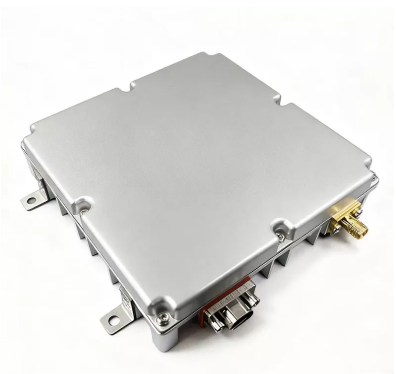
Comparing 4-Element CRPA with Larger CRPA Systems
Performance Comparison: 4-Element vs. 8-Element CRPAs
While the 4-element CRPA offers a strong solution for smaller platforms, larger CRPAs such as the 8-element design provide enhanced interference suppression. The increased number of elements allows the antenna to handle more complex jamming scenarios, providing greater flexibility and resilience in environments with high electromagnetic interference.
The 8-element CRPA’s increased number of nulls enables it to handle more sources of interference simultaneously, making it ideal for high-threat environments such as military operations, where electronic warfare is a significant concern.
4-Element CRPAs vs. Traditional Antennas
Traditional antennas typically offer omnidirectional reception, meaning they pick up signals equally from all directions. In contrast, CRPAs utilize advanced beamforming technology that allows them to steer their reception pattern, focusing only on the desired signals while rejecting interference. This makes CRPAs much more effective in environments where signal disruption is a concern, giving them a significant advantage over conventional antennas.
To better understand the differences between CRPA antenna types, here’s a quick comparison:
| Feature | 4-Element CRPA | 8-Element CRPA | 16-Element CRPA |
| Size | Compact | Larger | Larger |
| Weight | Lightweight | Heavier | Heavier |
| Power Consumption | Lower | Moderate | High |
| Interference Suppression | Moderate | High | Very High |
| Cost | Cost-effective | Higher | Very High |
| Ideal Use Case | Small Platforms | High-density Jamming | Military/Defense |
| GNSS Coverage | GPS, Galileo, Compass | GPS, Galileo, Compass | GPS, Galileo, Compass |
Technological Integration and Future Trends in CRPA Systems
Integrating 4-Element CRPAs with Modern GNSS Technology
As GNSS technology continues to evolve, integrating the 4-element CRPA with modern receivers and digital processors will enhance overall system performance. The integration of AI and advanced filtering technologies is expected to further improve the CRPA’s ability to identify and null out jamming signals with greater precision, ensuring more reliable GNSS performance in challenging environments.
Future Trends in CRPA Design and Usage
The future of CRPA antennas is bright, with ongoing advancements in signal processing and antenna design. Future developments are likely to include even more compact CRPAs that provide the same level of anti-jamming protection but in smaller, lighter packages. This will open up new possibilities for industries looking to adopt CRPA technology in a wider range of applications, from smartphones to autonomous vehicles.
Conclusion
In conclusion, the 4-element CRPA antenna offers a versatile and cost-effective solution for mitigating GNSS interference. Its compact design makes it ideal for mobile and space-constrained platforms, while its powerful anti-jamming capabilities ensure reliable navigation in contested environments. As the demand for reliable, uninterrupted satellite navigation continues to grow, the role of CRPAs, including the 4-element design, will only become more important.
For companies like RedSun (HK) Group Limited, their CRPA products deliver high-performance value, ensuring better navigation and reliability across industries. Their products are designed to meet the demands of modern, interference-prone environments.
FAQ
Q: What is a 4-element CRPA antenna?
A: A 4-element CRPA antenna is a specialized anti-jamming antenna designed to receive GNSS signals while blocking interference. It uses four antenna elements to focus on valid satellite signals and suppress unwanted noise.
Q: How does a 4-element CRPA antenna work?
A: The 4-element CRPA antenna uses beamforming and null-steering techniques. It adjusts the reception pattern to focus on desired GNSS signals and null out interference, ensuring reliable navigation.
Q: Why is a 4-element CRPA antenna important for anti-jamming?
A: The 4-element CRPA antenna provides effective anti-jamming capabilities by dynamically adjusting its reception pattern, ensuring stable GNSS reception even in environments with high interference.
Q: What are the advantages of using a 4-element CRPA antenna?
A: The main advantages include its compact size, effective interference suppression, and cost-effectiveness for small platforms like drones or mobile systems, all while maintaining high GNSS signal integrity.
Q: Where is a 4-element CRPA antenna commonly used?
A: 4-element CRPA antennas are used in military, defense, autonomous vehicles, and space-based applications where accurate GNSS reception is critical and reliable anti-jamming protection is needed.

 English
 العربية
 Français
 Русский
 Español
 Português
 Deutsch
 italiano
 日本語
日本語 한국어
한국어 Nederlands
 Tiếng Việt
 ไทย
ไทย Polski
 Türkçe
 አማርኛ
አማርኛ ພາສາລາວ
 ភាសាខ្មែរ
 Bahasa Melayu
 ဗမာစာ
ဗမာစာ தமிழ்
தமிழ் Filipino
 Bahasa Indonesia
 magyar
 Română
 Čeština
 Монгол
 қазақ
қазақ Српски
 हिन्दी
 فارسی
فارسی Kiswahili
 Slovenčina
 Slovenščina
 Norsk
Norsk Svenska
 українська
 Ελληνικά
 Suomi
Suomi Հայերեն
 עברית
עברית اردو
اردو Afrikaans
 Gaeilge
 नेपाली
 Aymara
 Беларуская мова
 guarani
 Krio we dɛn kɔl Krio
 Runasimi
 Wikang Tagalog


