Introduction
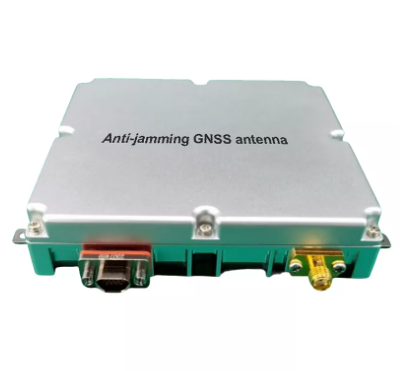
Global Navigation Satellite Systems (GNSS) are crucial for navigation, but they're vulnerable to interference. As these systems power military, aerospace, and autonomous vehicles, the risk of jamming and spoofing grows. One solution to this problem is the CRPA antenna. It protects GNSS receivers by adjusting its reception patterns, ensuring accurate and reliable navigation in the face of interference.
In this article, you'll learn how CRPA antennas work and why they're essential for reliable GNSS performance.
What is CRPA and How Does It Work?
Overview of CRPA Technology
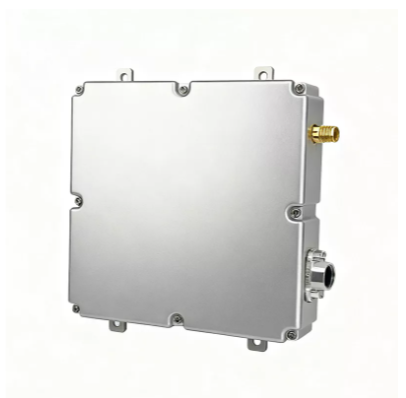
The CRPA antenna is a specialized multi-element system used in GNSS receivers to combat signal interference. Unlike traditional antennas, which receive signals equally from all directions, CRPAs adjust their reception patterns in real-time. This dynamic adjustment allows the antenna to focus on valid satellite signals while simultaneously nullifying or minimizing signals from unwanted sources, such as jammers.
CRPAs use multiple antenna elements arranged in a specific pattern, typically circular or square, around a central reference. These elements work together, under the control of sophisticated signal processing algorithms, to either direct the antenna's gain toward the satellite signals or create nulls in the direction of interference. This is achieved by adjusting the phase and amplitude of the signals received by each antenna element, a technique known as beamforming and null-steering.
The History and Evolution of CRPA
CRPAs first emerged in the military as a solution to the challenges of electronic warfare. During the Cold War, military forces realized that GPS signals, crucial for positioning and timing, could easily be disrupted or manipulated through jamming and spoofing. To address this vulnerability, CRPAs were developed as a way to protect GPS receivers by rejecting unwanted signals and amplifying legitimate ones.
Over time, this technology has evolved and found applications beyond military use. Today, CRPA antennas are integral to critical infrastructure, autonomous vehicles, and more, playing a crucial role in maintaining the accuracy and integrity of GNSS data.
CRPA's Role in Enhancing Signal Reception
The key feature of CRPA technology is its ability to use spatial diversity to enhance signal reception. In simple terms, this means that the antenna can discriminate between the direction of incoming satellite signals and interference, allowing it to focus on the satellite signals and reduce the impact of jamming.
The two primary techniques employed by CRPAs are nulling and beamforming. Nulling creates "nulls" in the antenna’s reception pattern to block out interference, while beamforming directs the antenna’s gain towards valid signals, enhancing their strength. These techniques are crucial for ensuring that GNSS receivers can continue to operate even in environments where interference is present.
CRPA's Function in Mitigating Interference
Detecting and Locating Interference Sources
CRPAs are equipped with advanced algorithms that enable them to detect and locate interference sources. By analyzing the phase and amplitude of incoming signals, CRPAs can identify the direction from which interference is coming. This detection capability is essential for effectively rejecting the unwanted signals and maintaining the integrity of GNSS data.
Once the direction of interference is detected, the CRPA antenna adjusts its reception pattern to minimize the impact of the jamming source. This real-time adaptation ensures that GNSS receivers remain locked onto valid satellite signals, even in the presence of interference.
Techniques: Nulling and Beamforming
The two core techniques used in CRPAs—nulling and beamforming—are fundamental to their effectiveness in mitigating interference.
| Feature | Nulling | Beamforming |
| Definition | Creates nulls to block unwanted signals | Focuses antenna gain on valid signals |
| Purpose | Reject interference | Amplify valid GNSS signals |
| Key Advantage | Effective in blocking directional jammers | Enhances the strength of valid signals |
| Key Limitation | May have limitations in complex environments | Requires precise signal control |
| Application | Used for blocking strong interference sources | Used for improving signal clarity in GNSS receivers |
These techniques work in tandem to provide robust protection against various types of interference, including both intentional jamming and spoofing.
The Importance of Signal Processing in CRPAs
Signal processing is critical to the operation of CRPA antennas. The algorithms that govern the dynamic adjustment of the antenna’s reception pattern rely on sophisticated mathematical models, such as the Wiener equation and gradient descent. These models help optimize the antenna’s performance by continuously adjusting the phase and amplitude of the received signals.
Through this real-time processing, CRPAs can adapt to changing interference conditions, ensuring that GNSS receivers maintain high levels of accuracy and reliability, even in challenging environments.
Key Applications of CRPAs in Different Sectors
Military and Defense Applications of CRPAs
The development of CRPA antennas was initially driven by military needs. In the context of electronic warfare, military vehicles and equipment require protection against jamming and spoofing. CRPA antennas have become essential in safeguarding GPS-based systems used in military navigation, targeting, and communications.
Military vehicles: CRPAs protect against adversarial jamming tactics, ensuring that military forces can rely on accurate positioning data during missions.
Aircraft: CRPAs are used to protect aviation navigation systems from interference, enabling safe and reliable flight operations.
Naval vessels: These antennas safeguard shipboard navigation systems, ensuring that naval operations remain unaffected by external interference.
Expanding CRPA Use in Civilian Sectors
While CRPAs were initially designed for military use, their application has expanded into civilian sectors, where reliable GNSS data is critical. In industries such as autonomous vehicles, aviation, and critical infrastructure, GNSS anti-jamming antennas like CRPAs provide the protection needed to ensure accurate and uninterrupted service.
Autonomous vehicles: CRPAs ensure that self-driving cars and drones can maintain accurate positioning even in environments where jamming or spoofing may occur.
Aviation: Commercial aircraft rely on CRPA antennas to maintain accurate navigation data during flight, particularly in regions with high electromagnetic interference.
Critical infrastructure: Power grids, telecommunications, and financial services benefit from CRPA technology, which helps prevent disruptions caused by jamming.
CRPAs in Autonomous Vehicles
The use of CRPA antennas in autonomous vehicles is becoming increasingly important. These vehicles depend on GNSS signals for positioning and navigation. However, interference from jammers and spoofers can disrupt the signals, leading to errors or even accidents. CRPAs provide a reliable solution by ensuring that the vehicle's navigation system can continue to function accurately and safely.
By using CRPA technology, autonomous vehicles can maintain situational awareness, even in environments where external interference is a threat.
| Sector | Applications | Example Use Cases |
| Military & Defense | Protects against jamming and spoofing | Military vehicles, aircraft, naval vessels |
| Civilian Sectors | Provides GNSS anti-jamming protection | Autonomous vehicles, aviation, critical infrastructure |
| Autonomous Vehicles | Ensures reliable positioning and safety | Self-driving cars, drones, autonomous navigation systems |
CRPA Technology: Benefits and Challenges
Advantages and Challenges of CRPA Technology
| Category | Advantages | Challenges |
| Protection | Strong anti-jamming and spoofing defense | Higher cost and power consumption |
| Reliability | Effective in contested environments | Larger form factor for smaller platforms |
| Adaptability | Real-time adjustments for dynamic threats | Integration complexity with existing systems |
| Cost & Performance | Balances cost with superior protection | May not be cost-effective for all applications |
Balancing Cost and Performance in CRPAs
When considering whether to integrate a CRPA antenna into a system, it’s essential to evaluate the balance between cost, performance, and system requirements. While CRPAs offer superior protection against interference, they come with trade-offs in terms of size, weight, and power consumption.
How to Test and Evaluate CRPA Performance
Testing CRPAs in the Lab: Methods and Best Practices
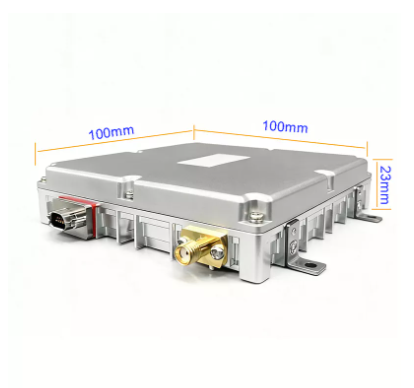
Testing CRPA performance in the lab is essential to ensure that the system functions effectively in real-world scenarios. Various laboratory testing methods are employed, including over-the-air (OTA) testing and conducted testing, which help simulate the interference environment that CRPAs might face. OTA testing allows for the simulation of electromagnetic conditions, helping assess the CRPA's performance when subjected to real-world interference patterns.
Conducted testing, on the other hand, involves directly injecting interference signals into the system, mimicking jamming and spoofing attacks. This type of testing helps evaluate the CRPA’s ability to reject interference while maintaining a stable and accurate GNSS signal. In both cases, engineers observe how well the antenna can adapt to interference and measure its signal integrity. These tests are critical in identifying weaknesses in the CRPA's performance, allowing for adjustments before deployment in operational environments.
Validating CRPAs in Dynamic Environments
Real-world conditions require CRPAs to function effectively while in motion, as interference patterns can change based on the direction and speed of the vehicle or platform carrying the antenna. Dynamic environment testing mimics these conditions, which is crucial because the CRPA must continuously adjust its reception pattern to counter interference. Testing is done on vehicles, aircraft, and ships, all of which present unique challenges in terms of motion and environmental changes.
For instance, in aircraft, the antenna may need to adjust rapidly as it moves through varying atmospheric conditions. Similarly, on ships or autonomous vehicles, movement can cause interference to change its angle and intensity, which requires real-time adjustments to the antenna’s reception pattern. The ability of a CRPA to maintain its functionality under such conditions is critical to ensuring reliable GNSS data in highly dynamic environments, where conditions are unpredictable and interference is common.
The Role of Realistic Threat Simulation
To fully understand how a CRPA will perform in operational environments, realistic threat simulation is crucial. In this phase of testing, a variety of interference scenarios are created to mimic potential real-world threats like jamming, spoofing, and even signal degradation due to weather or environmental factors. These scenarios can range from simple signal disruptions to sophisticated spoofing attempts designed to mislead the GNSS system.
By replicating a wide range of threats, engineers can assess the CRPA’s resilience and its ability to maintain reliable performance even under extreme conditions. This type of testing allows for the identification of potential vulnerabilities and enables engineers to fine-tune the system to ensure that it can handle a diverse set of interference methods. The use of realistic threat simulation helps provide confidence in the CRPA’s ability to perform as expected in complex, unpredictable environments.
The Future of CRPAs in GNSS Technology
Emerging Trends in CRPA Design and Functionality
As GNSS technology continues to evolve, so too does CRPA design. Future CRPAs will need to handle an increasing range of interference sources as the world becomes more connected and dependent on GNSS systems. One of the key trends is the push towards more compact and energy-efficient CRPAs. This is particularly important for applications in smaller platforms such as drones and portable devices, where size, weight, and power consumption are critical factors.
Another emerging trend is the development of multi-functional CRPAs that can seamlessly integrate with other systems, such as military communication networks, autonomous vehicle systems, and even next-generation satellite constellations. These advancements will not only make CRPAs more versatile but also improve their overall effectiveness by leveraging data from various systems. By working in tandem with other technologies, CRPAs can offer enhanced protection against interference, providing more reliable GNSS solutions in both military and civilian contexts.
Integration with Advanced PNT Technologies
The future of CRPAs also lies in their integration with advanced Positioning, Navigation, and Timing (PNT) technologies. These technologies are becoming increasingly important in providing more accurate, reliable, and secure navigation data. CRPAs will need to work alongside other GNSS systems, as well as complementary sensor systems such as inertial navigation systems (INS) and radar, to provide comprehensive solutions in complex environments.
As GNSS systems face more sophisticated threats, including cyber-attacks and advanced jamming, CRPAs will play a critical role in maintaining the integrity of navigation data. By integrating with other PNT technologies, CRPAs will not only ensure uninterrupted navigation but also improve the resilience of the entire system, making it better equipped to handle both traditional and emerging threats in highly contested environments.
CRPAs in Next-Generation GNSS Systems
Looking ahead, CRPA technology will be an integral part of next-generation GNSS systems. These systems will rely heavily on advanced CRPAs to ensure that positioning, navigation, and timing data remain secure and accurate. The growth of autonomous vehicles, unmanned aerial systems (UAS), and other high-stakes applications will further drive the need for reliable GNSS systems that can resist interference.
As the technology continues to evolve, CRPAs will also become more sophisticated, offering better signal processing, enhanced adaptability to changing environments, and faster response times. This will be essential as new interference sources and advanced spoofing techniques emerge. The role of CRPAs in ensuring the security and integrity of GNSS systems will become even more pronounced, and their ability to handle evolving threats will be key to the success of next-generation GNSS infrastructure.
Conclusion
The growing threats of jamming and spoofing in GNSS systems highlight the critical need for technologies like CRPA antennas. These systems play a vital role in protecting critical infrastructure, military operations, and autonomous systems from interference. As the demand for reliable navigation systems increases, CRPAs will continue to evolve and contribute to the future of secure GNSS technology.
RedSun (HK) Group Limited offers CRPA antennas with unique anti-jamming and anti-spoofing capabilities, ensuring stable operation of GNSS systems in complex environments.
FAQ
Q: What is a CRPA antenna and how does it work?
A: A CRPA antenna, or Controlled Reception Pattern Antenna, dynamically adjusts its reception patterns to combat interference. It uses multiple elements to direct the antenna's gain toward valid GNSS signals while blocking unwanted signals like jamming.
Q: Why is a CRPA antenna important for GNSS systems?
A: CRPA antennas are crucial for GNSS systems as they enhance signal reception by nullifying interference and boosting valid signals, ensuring reliable and accurate positioning in environments with potential jamming.
Q: How does CRPA help with anti-jamming for GNSS systems?
A: CRPA antennas detect interference and adjust their reception pattern using techniques like nulling and beamforming, which block jamming signals and amplify legitimate GNSS data, protecting the system’s functionality.
Q: What are the advantages of using a CRPA antenna for autonomous vehicles?
A: CRPA antennas provide autonomous vehicles with reliable GNSS positioning by minimizing interference from jammers or spoofers, ensuring safe navigation even in challenging environments.
Q: How much does a CRPA antenna cost?
A: The cost of a CRPA antenna depends on the technology and application requirements. Typically, CRPA antennas offer high-value protection against interference, making them essential for critical GNSS applications, but they can be more expensive than standard antennas.
Q: What is the difference between CRPA antennas and regular GNSS antennas?
A: Unlike standard GNSS antennas, CRPA antennas can adjust their reception patterns to focus on valid signals and reject interference, making them much more effective in contested environments prone to jamming or spoofing.

 English
 العربية
 Français
 Русский
 Español
 Português
 Deutsch
 italiano
 日本語
日本語 한국어
한국어 Nederlands
 Tiếng Việt
 ไทย
ไทย Polski
 Türkçe
 አማርኛ
አማርኛ ພາສາລາວ
 ភាសាខ្មែរ
 Bahasa Melayu
 ဗမာစာ
ဗမာစာ தமிழ்
தமிழ் Filipino
 Bahasa Indonesia
 magyar
 Română
 Čeština
 Монгол
 қазақ
қазақ Српски
 हिन्दी
 فارسی
فارسی Kiswahili
 Slovenčina
 Slovenščina
 Norsk
Norsk Svenska
 українська
 Ελληνικά
 Suomi
Suomi Հայերեն
 עברית
עברית اردو
اردو Afrikaans
 Gaeilge
 नेपाली
 Aymara
 Беларуская мова
 guarani
 Krio we dɛn kɔl Krio
 Runasimi
 Wikang Tagalog


