Introduction
GPS or GNSS – which antenna should you choose? The difference may seem subtle, but it has a significant impact on performance. As the demand for accurate positioning grows, understanding the distinction becomes crucial.
In this article, we’ll explore the key differences between GPS and GNSS antennas. You’ll also learn how an anti-jamming antenna can ensure reliability, even in challenging environments.
Key Differences Between GPS and GNSS
What is GPS and How Does it Work?
GPS is a satellite-based navigation system developed by the U.S. Department of Defense in the 1970s and became available for civilian use in the 1990s. It consists of a network of satellites that orbit Earth and transmit signals to receivers on the ground. These signals help determine the receiver's precise location, time, and velocity by calculating the time it takes for the signals to travel from the satellite to the receiver. GPS is widely used for everyday applications, such as vehicle navigation, mapping, and smartphone location services.
The primary function of GPS is to triangulate positions based on signals from at least four satellites. The system operates primarily within two frequency bands (L1 and L2) to ensure sufficient signal coverage for accurate positioning.
What is GNSS and How Does it Differ from GPS?
GNSS refers to a broader category of satellite navigation systems that include not only GPS, but also other systems such as GLONASS (Russia), Galileo (Europe), BeiDou (China), and QZSS (Japan). GNSS allows receivers to connect to a variety of satellites, providing a more robust and accurate positioning system. While GPS only uses signals from U.S. satellites, GNSS receivers can use signals from a mix of satellite constellations, which offers improved redundancy and accuracy.
This multi-constellation support enhances GNSS performance in areas where GPS might be insufficient or where satellite signals are obstructed. GNSS provides a wider range of signals and frequencies, making it more reliable, especially in dense urban environments, forests, or mountainous regions.
Key Differences Between GPS and GNSS Antennas
A GPS antenna is designed to only receive signals from GPS satellites, while a GNSS antenna can receive signals from multiple satellite systems. This capability makes GNSS antennas more versatile, providing better coverage and more accurate positioning, especially in environments where GPS signals might be obstructed. For instance, GNSS antennas can track signals from GPS, GLONASS, Galileo, and BeiDou, ensuring a more reliable connection even if one system is unavailable.
Moreover, GNSS antennas tend to be more sensitive, able to differentiate and pick up signals from multiple sources, providing more accurate data. This makes them particularly useful for high-precision applications, where minimal signal disruption is essential for proper functioning.
| Feature | GPS | GNSS |
| Satellite Systems | U.S. satellites only (NAVSTAR) | Multiple systems (GPS, GLONASS, Galileo, BeiDou) |
| Coverage Area | Global but limited in some regions | Global with better redundancy and accuracy |
| Signal Reception | Receives GPS signals only | Receives signals from multiple constellations |
| Accuracy | Good in open areas | Higher accuracy due to multi-system signals |
| Applications | Consumer navigation, mapping, etc. | High-precision applications, aviation, surveying |
How GPS Antennas Function and Their Applications
Components and Design of GPS Antennas
GPS antennas are typically designed with a few key components that allow them to capture and amplify satellite signals. These components include a radiating element, a ground plane, and a low noise amplifier (LNA). The radiating element captures signals from GPS satellites, while the ground plane reflects the signals to the radiating element, enhancing the antenna’s sensitivity. The LNA amplifies weak signals, ensuring better reception, especially in challenging environments like urban canyons or dense foliage.
The design of the antenna plays a critical role in the strength and reliability of the signal. As GPS signals are relatively weak, the quality of the antenna determines how well these signals can be received and processed.
How GPS Antennas Capture and Transmit Signals
GPS antennas work by receiving signals from GPS satellites and converting them into electrical signals. The signals are then transmitted to a GPS receiver, where the data is processed to determine the user's location and time. GPS antennas need to maintain a strong connection to at least four satellites to provide accurate positioning information.
In practice, this means that GPS antennas need to be able to detect signals from multiple satellites at once to achieve the necessary triangulation for precise location data. The stronger the antenna's reception, the more reliable the positioning information will be.
Common Uses of GPS Antennas
GPS antennas are widely used in consumer-grade devices such as smartphones, vehicle navigation systems, and handheld GPS units. They are designed to offer sufficient accuracy for everyday tasks, including driving directions, fitness tracking, and location-based services. The accuracy of a GPS antenna in these applications is generally sufficient for most users, with a typical error margin of around 5-10 meters.
In specialized industries like agriculture, forestry, and transportation, GPS antennas are used to collect and relay data for operations such as route planning, asset tracking, and vehicle fleet management.
How GNSS Antennas Work and Their Advantages
Core Components of GNSS Antennas
Similar to GPS antennas, GNSS antennas feature radiating elements, ground planes, and LNAs. However, GNSS antennas are specifically designed to receive signals from multiple satellite constellations. The ability to track more than one satellite system enhances the antenna’s reliability and ensures greater accuracy in positioning. GNSS antennas often include advanced filtering systems to reduce interference and increase signal strength, especially in crowded or obstructed environments.
These additional components enable GNSS antennas to differentiate between multiple signals, improving the overall efficiency and reliability of satellite communication.
How GNSS Antennas Receive Signals from Multiple Systems
A GNSS antenna captures signals from a variety of satellites, including those from GPS, GLONASS, Galileo, BeiDou, and others. The multi-system design enables GNSS antennas to offer better performance, especially in urban areas or remote environments where GPS signals alone may not be sufficient. By receiving signals from multiple constellations, GNSS antennas can maintain better accuracy and reliability, ensuring that positioning data is as precise as possible.
This capability is especially beneficial in locations with frequent obstructions like tall buildings, dense forests, or underground environments, where GPS alone might struggle to maintain a signal.
Wide-Ranging Applications of GNSS Antennas
GNSS antennas are essential in applications that require high-precision positioning, such as surveying, aviation, and autonomous vehicles. They are also widely used in sectors like agriculture, where precise location data is needed for tasks like crop monitoring and land mapping. GNSS antennas are critical for projects that require constant, accurate tracking, even in areas with limited satellite visibility.
For instance, in surveying, GNSS antennas provide centimeter-level accuracy, which is crucial for mapping and construction projects. In aviation, GNSS antennas ensure that aircraft are consistently positioned with high precision, improving safety and navigation.
Why GNSS Antennas Are More Beneficial Than GPS Antennas
Improved Accuracy with GNSS Antennas
The primary advantage of GNSS antennas over GPS antennas is their improved accuracy. Because they can connect to a variety of satellites from different systems, GNSS antennas can calculate positions with greater precision. This is particularly useful in situations where GPS signals may be weak or unavailable, such as in areas with tall buildings, dense trees, or mountainous terrain.
With GNSS antennas, accuracy is enhanced by the use of multiple frequencies and signals, which reduce errors caused by factors such as atmospheric interference and multipath reflections. This makes GNSS antennas ideal for applications requiring the highest level of precision.
Enhanced Reliability and Redundancy
One of the key benefits of GNSS antennas is the redundancy they offer. If one satellite system is obstructed or fails, the antenna can seamlessly switch to another system. This flexibility ensures more reliable positioning, which is crucial for industries like aviation, marine navigation, and agriculture, where consistent data is vital.
For example, in the event of a signal disruption from one satellite system, GNSS antennas ensure that data is still being collected from another, maintaining reliable positioning even in challenging environments.
Stronger Resistance to Signal Interference
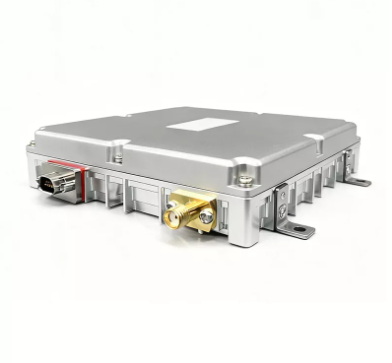
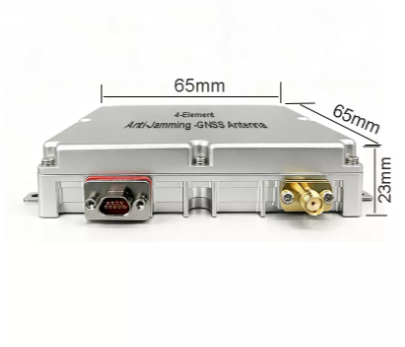
GNSS antennas are often equipped with anti-jamming technology, which makes them more resistant to interference. GPS systems can be easily disrupted by signal jamming, leading to potential loss of positioning data. GNSS antennas, however, can rely on multiple satellite signals, making them more resilient to disruptions. Anti-jamming capabilities, such as those found in CRPA (Controlled Reception Pattern Antenna) systems, further enhance this resistance, ensuring continuous signal reception even in hostile environments.
With the ability to block or filter unwanted signals, GNSS antennas with anti-jamming capabilities are invaluable for critical applications where uninterrupted service is essential.
Advantages of Multi-band and Dual-band GNSS Antennas
Multi-band and dual-band GNSS antennas provide another layer of robustness. By receiving signals on multiple frequencies, these antennas can better differentiate between different satellite signals, which helps mitigate errors caused by atmospheric interference. These antennas are essential for applications requiring extremely high accuracy, such as geodesic surveys or real-time kinematic (RTK) positioning.
In environments where precision is key, dual-band and multi-band GNSS antennas enhance both accuracy and reliability, ensuring that users receive the most precise data possible.
Understanding Anti-Jamming Technology in GNSS Antennas
What is Anti-Jamming and Why Does it Matter?
Anti-jamming technology is a key feature in modern GNSS antennas. Jamming occurs when external signals interfere with the GNSS signals, disrupting the positioning data. Anti-jamming antennas are designed to detect and block such interference, allowing the system to continue receiving accurate data. This technology is particularly important for military applications, critical infrastructure, and other sensitive systems where precise location tracking is crucial.
In industries where reliability is paramount, such as military and defense, anti-jamming capabilities ensure that GNSS systems remain operational, even under the threat of deliberate interference.
How Anti-Jamming Improves GNSS Performance
Anti-jamming technology works by using specialized antennas, such as CRPA antennas, that can reject unwanted signals and focus on the GNSS signal. These antennas use advanced algorithms to filter out jamming signals, ensuring that the system continues to function reliably. By maintaining accurate signal reception in environments with high levels of interference, anti-jamming technology is essential for applications in security, defense, and aviation.
With the ability to adapt and reject interference, GNSS systems equipped with anti-jamming technology are crucial for uninterrupted service in high-risk areas.
Military and Security Applications of Anti-Jamming
Anti-jamming is critical in military and security applications, where loss of GPS signals could have dire consequences. Military-grade GNSS antennas are equipped with robust anti-jamming features to ensure that they continue to work in hostile environments. These antennas are designed to maintain accurate positioning even when the system is under attack or in areas with high interference from other electronic devices.
Military and defense sectors rely heavily on anti-jamming technology to ensure the security and success of their operations, particularly in environments where signal disruption is a serious risk.
Choosing the Right Antenna: GPS vs GNSS
Factors to Consider When Choosing an Antenna
When deciding between a GPS and a GNSS antenna, consider your specific needs. For general navigation, a GPS antenna may be sufficient. However, for applications requiring high-precision positioning or operating in environments where GPS signals may be blocked, a GNSS antenna is a better choice. Other factors to consider include the antenna's size, cost, and resistance to interference.
When to Choose GPS Antennas for Simple Navigation
For applications such as vehicle navigation or smartphones, a GPS antenna is often sufficient. These antennas provide adequate accuracy for day-to-day activities but may not perform well in challenging environments, such as urban canyons or dense forests.
For basic navigation needs, GPS antennas are generally more affordable and suitable for the task, but they lack the advanced features that GNSS antennas offer in complex environments.
When to Choose GNSS Antennas for Precision and Reliability
For high-precision applications, such as surveying, aviation, or autonomous vehicles, a GNSS antenna is essential. These antennas provide greater accuracy, redundancy, and resistance to interference, making them ideal for applications that require constant, reliable positioning data.
Whether for mapping, drone navigation, or industrial automation, GNSS antennas ensure the reliability and precision needed in demanding environments.
| Use Case | GPS Antenna | GNSS Antenna |
| Consumer Navigation | Common in smartphones and car navigation systems | GNSS antennas are not typically needed for basic navigation but may be used in advanced systems. |
| Surveying and Mapping | Limited accuracy, sufficient for general mapping tasks | Essential for high-precision mapping and land surveying, provides centimeter-level accuracy. |
| Autonomous Vehicles | Often used in basic vehicle positioning systems | Critical for reliable positioning and route navigation in autonomous driving systems. |
| Aviation | Not commonly used in high-precision aviation | Required for precise and safe navigation in aviation, ensuring aircraft location data is accurate. |
| Agriculture (Precision Farming) | Not suitable for high-precision farming tasks | Used for tracking and monitoring in precision farming to improve crop yield and land management. |
Conclusion
Understanding the differences between GPS and GNSS antennas is essential for choosing the right technology. GPS antennas work for basic navigation, while GNSS antennas offer higher accuracy, reliability, and better resistance to interference. GNSS antennas, especially those with anti-jamming capabilities, provide continuous service, even in challenging environments.
For reliable and future-proof navigation, investing in GNSS solutions with anti-jamming technology is a wise decision. Whether in surveying, security, or transportation, GNSS antennas from RedSun (HK) Group Limited provide versatility and robustness for high-precision applications.
FAQ
Q: What is the main difference between a GPS and GNSS antenna?
A: A GPS antenna receives signals from GPS satellites only, while a GNSS antenna can connect to multiple satellite constellations like GPS, GLONASS, Galileo, and BeiDou, offering better accuracy and coverage.
Q: Why do I need an anti-jamming antenna for GNSS applications?
A: An anti-jamming antenna enhances GNSS signal reliability by blocking interference. This is especially crucial in security or military operations where signal integrity is essential.
Q: How does an anti-jamming antenna improve GNSS performance?
A: An anti-jamming GNSS antenna filters out unwanted signals, ensuring continuous and accurate positioning in environments with high interference, such as urban areas or remote locations.
Q: Can a GPS antenna work with anti-jamming technology?
A: Yes, GPS anti-jamming antennas are designed to resist interference, providing reliable performance even in challenging conditions, though GNSS antennas offer broader signal coverage.
Q: What is a CRPA antenna, and why is it used?
A: A CRPA antenna (Controlled Reception Pattern Antenna) is a type of anti-jamming GNSS antenna that actively manages signal reception to block interference, crucial for military or high-security applications.

 English
 العربية
 Français
 Русский
 Español
 Português
 Deutsch
 italiano
 日本語
日本語 한국어
한국어 Nederlands
 Tiếng Việt
 ไทย
ไทย Polski
 Türkçe
 አማርኛ
አማርኛ ພາສາລາວ
 ភាសាខ្មែរ
 Bahasa Melayu
 ဗမာစာ
ဗမာစာ தமிழ்
தமிழ் Filipino
 Bahasa Indonesia
 magyar
 Română
 Čeština
 Монгол
 қазақ
қазақ Српски
 हिन्दी
 فارسی
فارسی Kiswahili
 Slovenčina
 Slovenščina
 Norsk
Norsk Svenska
 українська
 Ελληνικά
 Suomi
Suomi Հայերեն
 עברית
עברית اردو
اردو Afrikaans
 Gaeilge
 नेपाली
 Aymara
 Беларуская мова
 guarani
 Krio we dɛn kɔl Krio
 Runasimi
 Wikang Tagalog


