Introduction
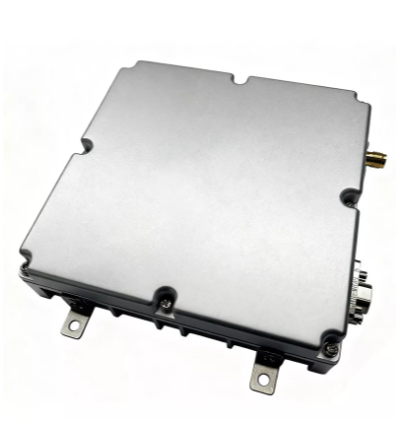
In today's fast-paced, tech-driven world, GNSS is critical for countless applications. However, GNSS signals are weak and vulnerable to interference, which can compromise accuracy.
This is where CRPA antennas come into play, offering enhanced signal reliability. In this article, we’ll dive into the differences between CRPA and FRPA antennas, focusing on their unique roles in ensuring uninterrupted GNSS performance.
Overview of FRPA and CRPA Antennas
What is FRPA (Fixed Reception Pattern Antenna)?
An FRPA antenna is a traditional type of GNSS antenna commonly used for general navigation purposes. This antenna has a fixed reception pattern, meaning that it receives signals equally from all directions within its designed coverage range. It is generally simple in design and can be passive or active, depending on the specific application.
Examples of FRPA: FRPAs are widely used in applications where interference is not a significant concern, such as in aircraft, ships, and other transport systems. For instance, the FRPA-3 is commonly used in military and aviation contexts for basic GNSS reception.
Key Characteristics of FRPA:
Omnidirectional: The antenna is designed to receive signals from virtually all directions in the sky.
Simple design: FRPAs are typically easy to install and maintain, making them a cost-effective choice.
Vulnerable to jamming: Since FRPAs have a static pattern, they are vulnerable to jamming because they cannot adjust to the interference dynamically. In environments where GNSS signals face heavy interference or GPS anti-jamming threats, FRPAs may not provide reliable performance.
What is CRPA (Controlled Reception Pattern Antenna)?
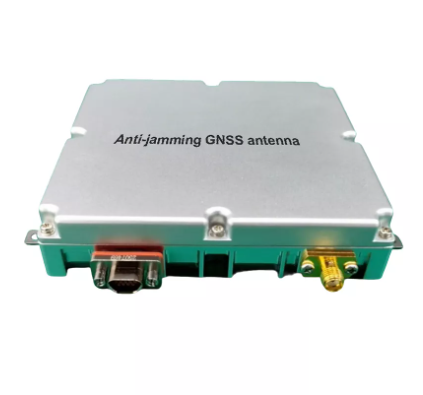
A CRPA antenna, on the other hand, is a more sophisticated antenna designed to counteract interference in dynamic environments. Unlike FRPAs, CRPAs can actively control their reception patterns, enabling them to adapt to interference by creating nulls (zones of low sensitivity) in the direction of unwanted signals while continuing to receive signals from the desired GNSS satellites.
Key Characteristics of CRPA:
Adaptive reception patterns: CRPAs can steer beams towards GNSS satellites while rejecting interference from other directions, making them ideal for anti-jamming applications.
Multi-element design: Unlike the simple single-element FRPA design, CRPAs utilize multiple antenna elements arranged in a specific configuration to enable more complex signal processing.
Active components: CRPAs require external power to drive their advanced signal processing capabilities, making them more complex and expensive than their passive counterparts, such as FRPAs.
Here’s a comparison of the key differences between FRPA and CRPA:
| Feature | FRPA (Fixed Reception Pattern Antenna) | CRPA (Controlled Reception Pattern Antenna) |
| Reception Pattern | Static, omnidirectional | Adaptive, with beam steering and null steering |
| Design | Simple, often single-element | Multi-element design for complex signal processing |
| Power Source | Passive (no external power required) | Active (requires external power) |
| Complexity | Simple and cost-effective | Complex, expensive, and requires advanced signal processing |
| Resistance to Jamming | Vulnerable to jamming due to fixed pattern | Strong anti-jamming capabilities due to adaptive pattern |
| Application | Suitable for basic GNSS reception, low interference areas | Ideal for high-risk environments needing anti-jamming protection |
Key Differences Between CRPA and FRPA Antennas
Reception Pattern: Static vs. Adaptive
FRPA: An FRPA antenna has a static, omnidirectional reception pattern, meaning that it is designed to receive signals equally from all directions. While this makes it simple and easy to use, it also means that it cannot adjust to interference or dynamically change its pattern to improve reception.
CRPA: CRPAs, in contrast, have an adaptive reception pattern. This means that the antenna can steer its beams dynamically to focus on signals from the GNSS satellites and steer nulls towards sources of interference or jamming. This adaptive feature significantly enhances the GNSS anti-jamming performance of CRPAs.
Design and Complexity: Simple vs. Multi-element
FRPA: The design of an FRPA antenna is relatively simple, often comprising a single antenna element. This makes FRPAs easy to implement and cost-effective, but it also limits their ability to adapt to interference or varying signal conditions.
CRPA: On the other hand, CRPAs are multi-element systems, meaning they utilize multiple antenna elements arranged in a configuration to allow more precise control over the reception pattern. This complexity enables CRPAs to reject interference while maintaining high-quality GNSS signals.
Power and Electronics: Passive vs. Active
FRPA: FRPAs are typically passive antennas, meaning they do not require any external power source or advanced electronics to operate. This simplicity contributes to their lower cost and smaller size.
CRPA: In contrast, CRPAs are active antennas. They require external power and are equipped with complex signal processing electronics that allow them to adjust their reception patterns dynamically. This makes CRPAs more expensive and larger in size compared to FRPAs.
Cost and Size: Affordable vs. Advanced
FRPA: FRPAs are typically more affordable, compact, and lightweight. Their low cost makes them an attractive choice for simple applications where high-level anti-jamming features are not critical.
CRPA: CRPAs, being more complex and featuring active signal processing, are larger and more expensive. They are ideal for high-performance GNSS applications, particularly in military, aerospace, and autonomous vehicle systems, where the cost of anti-jamming protection is justifiable.
Here’s a quick comparison of the main differences between FRPA and CRPA antennas:
| Feature | FRPA (Fixed Reception Pattern Antenna) | CRPA (Controlled Reception Pattern Antenna) |
| Cost | More affordable, lower upfront cost | Higher cost due to complexity and advanced features |
| Size | Compact, lightweight | Larger and bulkier |
| Ease of Installation | Simple to install and maintain | Requires more complex setup and maintenance |
| Jamming Resistance | Poor resistance to interference | Excellent resistance, especially in high-interference environments |
| Use in Critical Applications | Less suitable for critical, high-risk applications | Ideal for military, aerospace, and high-security use cases |
| Technology Requirement | No external signal processing or electronics | Requires external power and advanced signal processing |
Choosing the Right Antenna: When to Use CRPA or FRPA?
Military and Defense Applications: High-Security vs. Low-Risk
CRPA: In military and defense applications, anti-jamming is a key concern. CRPAs are the preferred choice in high-security environments, especially where GNSS signals are under direct attack from electronic warfare tactics or intentional jamming. They offer reliable protection by dynamically adapting to the presence of interference.
FRPA: FRPAs, on the other hand, are still used in less critical military settings or in areas with lower risks of interference. They are a suitable solution when cost-efficiency and simplicity are prioritized over advanced jamming resistance.
Civilian and Commercial Use: Complex vs. Simple Needs
CRPA: For autonomous vehicles, commercial aircraft, and critical infrastructure (e.g., power grids, financial systems), CRPAs are highly recommended. These applications demand precise GNSS positioning and the ability to mitigate jamming and spoofing, making CRPAs the superior choice for anti-jamming antenna solutions.
FRPA: For non-critical applications like basic civilian navigation, FRPAs are often adequate. They are a reliable, cost-effective solution for applications that do not require the high levels of protection and dynamic adjustments provided by CRPAs.
Cost Considerations: When Does CRPA Justify the Extra Cost?
CRPA: CRPAs justify their higher cost in environments where high-level GNSS protection is necessary. For example, in military applications or urban settings where GPS anti-jamming is critical, the investment in CRPA antennas is often warranted due to their ability to enhance signal integrity and prevent disruptions.
FRPA: For environments where interference is less of a concern, FRPAs offer a more cost-effective solution. For everyday commercial applications that don’t require advanced anti-jamming capabilities, FRPAs are a practical and affordable choice.
Here’s a quick reference to match the best antenna choice with your application:
| Application Area | Best Option | Reason |
| Military and Defense | CRPA | High-level anti-jamming and anti-spoofing capabilities needed. |
| Commercial Aircraft | CRPA | Requires reliable GNSS for precise navigation and safety. |
| Autonomous Vehicles | CRPA | High resistance to interference essential for safety. |
| Basic Navigation Systems | FRPA | Cost-effective for applications with minimal interference risk. |
| Aerospace | CRPA | Ensures reliability in high-risk, high-interference environments. |
| Low-cost Civilian Applications | FRPA | Sufficient for applications like recreational use or low-cost devices. |
How CRPA Antennas Protect GNSS Signals
Anti-Jamming: CRPA’s Dynamic Mitigation vs. FRPA’s Vulnerability
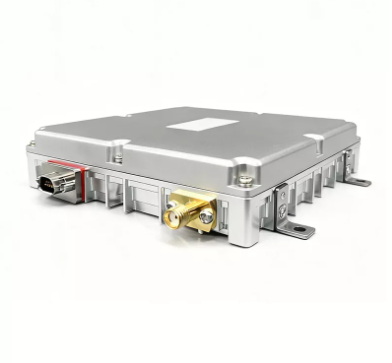
CRPA antennas are specifically designed to protect GNSS systems from interference, particularly in environments with heavy jamming. These antennas utilize adaptive signal processing, allowing them to actively identify sources of interference and dynamically adjust their reception pattern. By steering nulls (regions where the antenna is insensitive) in the direction of the jamming signals, CRPAs can effectively block out unwanted interference while maintaining strong reception of the desired GNSS signals. This feature makes CRPAs indispensable in high-risk environments, such as military operations or areas with high electronic warfare activity, where traditional anti-jamming measures may fail.
In contrast, FRPA antennas, due to their static, omnidirectional pattern, are more susceptible to interference. Since FRPAs cannot dynamically adjust their reception pattern, they cannot effectively reject or minimize the impact of jamming. As a result, they perform poorly in GPS anti-jamming threats or other environments where interference levels are high. The lack of adaptability in FRPA antennas means that they are less reliable in environments where the signal integrity is constantly challenged by external factors like interference or spoofing.
Resistance to Spoofing: CRPA’s Advanced Protection
Spoofing is a technique where malicious actors send fake GNSS signals to mislead receivers into thinking they are in a different location. This is a serious security threat, especially in critical infrastructure, military applications, or autonomous systems. CRPA antennas excel in combating spoofing attacks through advanced signal processing technologies. By continuously monitoring and analyzing incoming signals, CRPAs can detect discrepancies between the expected GNSS signal and any false signals being broadcast by spoofers. Once detected, CRPAs use their dynamic signal processing capabilities to reject the spoofed signals, ensuring the receiver only relies on legitimate GNSS data.
On the other hand, FRPA antennas are more vulnerable to spoofing attacks because they lack the ability to process and adapt to incoming signal anomalies. Since FRPAs are static and do not have the ability to differentiate between real and spoofed signals actively, they are more likely to be deceived by spoofers. This makes FRPAs unsuitable for applications requiring robust protection against spoofing, such as those in security-sensitive industries or autonomous vehicles where precise location data is crucial.
Improving GNSS Accuracy: CRPA’s Signal Fidelity vs. FRPA’s Weakness
One of the key advantages of CRPA antennas is their ability to enhance GNSS accuracy in environments prone to interference. Thanks to their advanced signal processing algorithms, CRPAs can filter out unwanted noise and interference, improving the signal fidelity of GNSS signals. This is particularly important in challenging environments such as urban canyons, where buildings block satellite signals, or military zones, where jamming is common. CRPAs can focus on maintaining a high-quality, accurate signal even in these high-interference areas, which is essential for precision navigation, timing, and positioning applications.
FRPAs, however, do not have this advanced capability. Their simple, static design means they are unable to distinguish between signal interference and legitimate GNSS data. As a result, FRPAs are more prone to signal degradation in environments with significant interference. This can lead to lower accuracy in GNSS positioning, which can be problematic for applications that depend on precise and reliable signal data, such as navigation systems in autonomous vehicles or aviation. Without the ability to actively filter and adapt to interference, FRPAs may not provide the level of accuracy required for critical systems, especially in complex or hostile environments.
The Future of CRPA and FRPA Antennas in GNSS Systems
Advancements in CRPA Technology: A Growing Trend
As the need for reliable and secure GNSS systems grows, CRPAs are becoming more widespread. Technological advances are leading to smaller, more affordable CRPA models, which are expected to see broader adoption in civilian applications, including autonomous vehicles and urban infrastructure.
The Continued Role of FRPAs: Cost-Effective in Simple Applications
Despite the growing adoption of CRPAs, FRPAs will remain relevant in applications where simplicity, cost-effectiveness, and low-risk environments are prioritized. They are still widely used in low-interference scenarios and provide a reliable solution for basic GNSS reception.
Conclusion
When selecting between a CRPA antenna and an FRPA antenna, the decision hinges on the level of interference, cost, and the importance of the GNSS application. CRPAs offer superior anti-jamming and anti-spoofing capabilities but come at a higher cost. Meanwhile, FRPAs remain a reliable and affordable option for less demanding applications.
As GNSS technologies advance, CRPA antennas are likely to dominate mission-critical applications, while FRPAs will continue to serve in simpler, civilian use cases.
For businesses needing high-performance GNSS systems, RedSun (HK) Group Limited offers innovative CRPA solutions that deliver exceptional value, ensuring reliable operation even in high-interference environments.
FAQ
Q: What is the difference between a CRPA antenna and an FRPA antenna?
A: A CRPA antenna has an adaptive reception pattern, allowing it to steer beams and reject interference, making it ideal for anti-jamming. In contrast, an FRPA antenna has a static, omnidirectional pattern and is more vulnerable to jamming.
Q: How does a CRPA antenna improve GNSS performance?
A: A CRPA antenna improves GNSS performance by dynamically adjusting its reception pattern, using advanced signal processing to reject interference and enhance accuracy, making it a powerful anti-jamming antenna.
Q: When should I use a CRPA antenna instead of an FRPA antenna?
A: Use a CRPA antenna when anti-jamming protection is crucial, especially in high-risk environments like military or aerospace. For basic navigation in low-interference areas, an FRPA antenna may be sufficient.
Q: What makes a CRPA antenna better than an FRPA antenna in terms of anti-jamming?
A: A CRPA antenna actively adapts to interference by steering nulls and beams, making it much more effective at rejecting jamming signals compared to the static design of an FRPA antenna.
Q: Are CRPA antennas more expensive than FRPA antennas?
A: Yes, CRPA antennas are typically more expensive due to their complex multi-element design, advanced signal processing, and ability to handle GPS anti-jamming threats, while FRPA antennas are simpler and more cost-effective.
Q: Can an FRPA antenna handle high levels of interference?
A: No, FRPA antennas are vulnerable to high levels of interference because they cannot adjust their reception pattern, making them less suitable for GNSS anti-jamming applications compared to CRPA antennas.

 English
 العربية
 Français
 Русский
 Español
 Português
 Deutsch
 italiano
 日本語
日本語 한국어
한국어 Nederlands
 Tiếng Việt
 ไทย
ไทย Polski
 Türkçe
 አማርኛ
አማርኛ ພາສາລາວ
 ភាសាខ្មែរ
 Bahasa Melayu
 ဗမာစာ
ဗမာစာ தமிழ்
தமிழ் Filipino
 Bahasa Indonesia
 magyar
 Română
 Čeština
 Монгол
 қазақ
қазақ Српски
 हिन्दी
 فارسی
فارسی Kiswahili
 Slovenčina
 Slovenščina
 Norsk
Norsk Svenska
 українська
 Ελληνικά
 Suomi
Suomi Հայերեն
 עברית
עברית اردو
اردو Afrikaans
 Gaeilge
 नेपाली
 Aymara
 Беларуская мова
 guarani
 Krio we dɛn kɔl Krio
 Runasimi
 Wikang Tagalog


