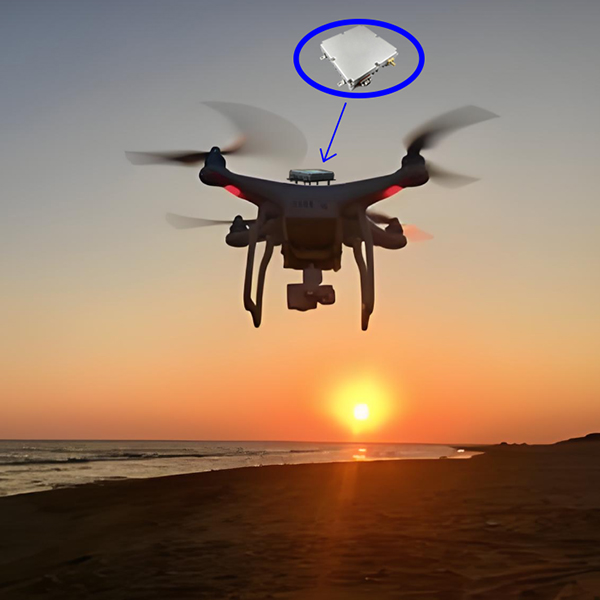
1. A Turbulent World, and a Simple Wish: Safe, Reliable Flights
According to various public reports and statistics, dozens of countries and regions around the world are currently affected by war, conflict or high political tension. While the geopolitical map looks complicated, the core wish of ordinary people is very simple: peace instead of war, and safe, reliable operations for civilian drones where flying is legal and authorized.
In real operations, drones are widely used for surveying, inspection, agriculture, emergency response, logistics and many other missions. When GNSS (GPS, BeiDou, GLONASS and others) is disrupted by interference or spoofing, the consequences can be serious:
Loss of control or crashes
Destruction of expensive payloads and airframes
Risks to people and property on the ground
In extreme cases, regulatory and legal issues
Against this backdrop, GNSS resilience is no longer just a military or academic topic. It has become a practical necessity for every business that depends on UAVs and autonomous platforms to deliver safe, repeatable and economically viable services.
2. Why GNSS Has Become So “Fragile” in Practice
GNSS signals travel tens of thousands of kilometers from satellites to the Earth’s surface. By the time they arrive, their power levels are extremely low – like whispering across a noisy stadium. A small jammer, or even unintentional RF interference, is like turning on a loud speaker right next to your ear: the weak “whisper” is quickly drowned out.
In today’s international environment, GNSS faces several escalating threats:
Deliberate jamming: transmitters that flood GNSS bands with noise, preventing receivers from locking onto satellites.
Unintentional interference: emissions from other systems such as radars, communication equipment or power electronics.
Spoofing: fake GNSS‑like signals trying to trick receivers into believing false positions or times.
For drones, autonomous systems and robotic vehicles, these threats all mean the same thing: navigation becomes untrustworthy and flight is no longer safe. Improving GNSS anti‑jamming performance is therefore a key step in reducing crashes and economic losses.
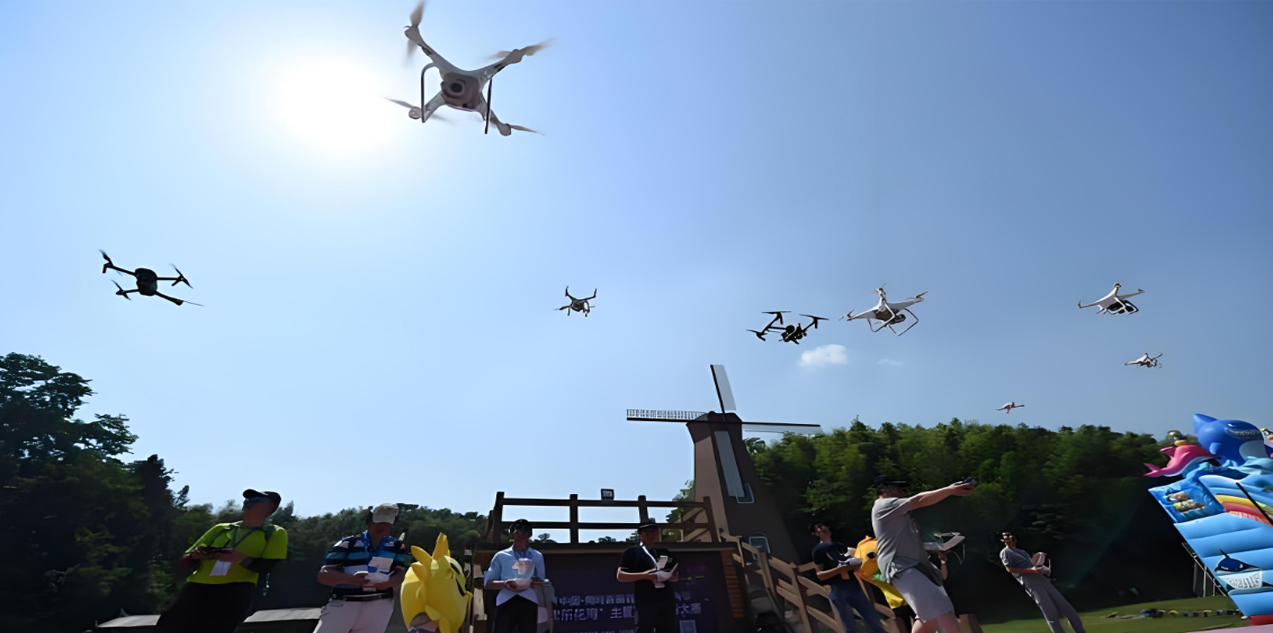
3. What Exactly Is an Anti‑Jamming GNSS Antenna?
When people first think about “anti‑jamming”, they often assume that upgrading to a better GNSS receiver will solve the problem. In reality, if the front‑end antenna feeds the receiver with interference‑contaminated signals, even the best receiver can only do so much.
A conventional GNSS antenna typically has:
A single radiating element (one “ear”)
Passive reception of everything in its band
No ability to distinguish between satellites and jammers in terms of direction
An anti‑jamming GNSS antenna, especially a multi‑element CRPA design, is fundamentally different:
Multi‑element array structure
4, 8, 16 or even 32 elements – like having many “ears” pointing in slightly different directions.
Different elements respond differently to signals arriving from different angles.
Controlled reception pattern (CRPA)
By carefully adjusting phase and amplitude of each element, the system forms a steerable reception pattern.
It can increase gain toward genuine satellites and create deep nulls toward jammers.
Integration with intelligent signal processing
Real‑time detection of interference directions and types (wideband, narrowband, sweep, pulse, etc.).
Adaptive algorithms that dynamically reshape the reception pattern to push interference down and pull useful signals out.
In simple terms: a conventional antenna is “ears without a brain”; an anti‑jamming antenna is “ears plus a brain” at the RF front‑end.
4. How Much Safer Can Drones Become with Anti‑Jamming Antennas?
Without any anti‑jamming measures, when a drone flies through an interference zone, several things can happen:
The GNSS receiver loses lock temporarily, forcing the flight controller into attitude‑only or manual mode.
Waypoint navigation and return‑to‑home functions may fail.
In severe cases, navigation collapses entirely, and the drone may drift, lose control or crash.
By adding a CRPA‑based anti‑jamming GNSS antenna, operators can significantly improve:
Probability of maintaining usable GNSS service under interference, by preserving lock on enough satellites.
Signal‑to‑interference‑plus‑noise ratio (SINR) seen by the receiver, leading to more stable positioning.
Safety margin and mission reliability, especially for high‑value, long‑range missions.
From a risk‑management perspective, an anti‑jamming antenna is a small, predictable investment to reduce low‑probability but high‑impact failures.
5. Real‑World Applications in Daily Life and Commercial Work
Anti‑jamming may sound like a high‑end technology, but its impact is increasingly visible across everyday life and commercial operations.
5.1 Industrial and Infrastructure Drones
Power line and pipeline inspection
Rail, road, bridge and tunnel inspection
Urban infrastructure and tower inspections, solar plant checks
These missions often occur in harsh EM environments: near high‑voltage lines, communication base stations, radar sites and other RF sources. Anti‑jamming antennas help drones fly more stably, more accurately and with greater confidence in these challenging areas.
5.2 Agriculture, Forestry and Environmental Protection
Precision spraying, fertilizing and seeding
Forest fire monitoring and pest surveillance
River and lake monitoring, nature reserve patrols
Even if a single drone is not extremely expensive, mission continuity, safety and environmental responsibility are all important. Anti‑jamming antennas can reduce mis‑sprays, missed areas and crashes due to GNSS anomalies.
5.3 Logistics and Emergency Response
Parcel and medical supply delivery, especially to remote or isolated regions
Post‑disaster assessment, emergency communication relay, and relief supply drops
Natural disasters and crisis zones are often characterized by chaotic and unpredictable RF conditions. If a drone loses GNSS and crashes during a critical mission, it wastes not only equipment but also valuable response time. Anti‑jamming antennas add a crucial layer of reliability to these high‑stakes operations.
5.4 Robotics and Autonomous Systems
Outdoor patrol robots and security robots
Unmanned ground vehicles (UGVs) in ports, mines and industrial zones
Multi‑sensor navigation systems combining GNSS with IMU, odometry and vision
For these systems, GNSS is an important component of a wider sensor fusion stack. Anti‑jamming antennas provide a more stable GNSS reference, enabling smoother fusion with other sensors and more dependable autonomous behavior.
6. CHREDSUN Anti‑Jamming Antennas: Bridging Technology and Real‑World Use
CHREDSUN has long focused on navigation and positioning technology, combining multi‑element anti‑jamming antennas with dedicated anti‑jamming baseband chips and comprehensive test facilities. Our anti‑jamming GNSS antenna family includes:
Compact 4‑element anti‑jamming antennas
65×65 mm, 100×100 mm class, tailored for small UAVs and size‑constrained platforms.
Support BDS B1, GPS L1 and Galileo E1, suppressing wideband, sweep and pulse interference from 1–3 directions.
Mid‑size 8‑element and 16‑element antennas
150×150 mm arrays designed for industrial UAVs, vehicles and maritime platforms.
Support multi‑constellation B1/L1/E1, with the ability to mitigate jamming from up to 7 or 15 directions and maintain coverage over full 360° azimuth and wide elevation angles.
Dual‑band 32‑element antennas (dual sixteen‑element arrays)
230×230 mm modules supporting B1/L1/E1 + L2 or B1/L1/E1 + L5, combining anti‑jamming processing with a built‑in GNSS receiver.
Designed for mission‑critical aviation, defense and public infrastructure applications requiring robust dual‑band PNT.
Key advantages:
Multi‑constellation, multi‑band support for GPS, BeiDou, GLONASS and Galileo, including extension to L2/L5/B3 bands where required.
High anti‑jamming performance, with the ability to suppress 1–15 sources of wideband, sweep and pulse interference, and jamming‑to‑signal ratios reaching 105 dB or more at –130 dBm signal levels.
Engineering‑ready design with 9–36 V wide input, IP65‑class environmental protection, SMA RF ports and J30J power/data connectors (RS422/RS232).
Integrated receiver options on several models, delivering either protected RF or full PVT output directly from the antenna unit.
Beyond hardware, CHREDSUN also provides solution selection, interface guidance and test support, helping customers turn the idea of “resilient PNT” into a working, verifiable system.
7. We Welcome You to Learn, Share and Collaborate
In a world full of uncertainty, we sincerely hope:
There will be more peace and fewer wars.
Civilian drones and robots can safely and legally perform their tasks without unnecessary interference.
Crashes, economic losses and safety incidents caused by GNSS interference can be reduced as much as possible.
If you:
Are looking for a GNSS anti‑jamming solution for UAVs, robots or autonomous systems.
Want to understand how 4‑, 8‑, 16‑ or 32‑element CRPA antennas can be selected and applied.
Would like to discuss test methods, application scenarios or customization options.
We warmly welcome you to connect with the CHREDSUN technical team. Let’s learn together, share experience, and explore safer and more resilient navigation solutions for the air, the ground and the sea.
Whether you are an engineer, a system integrator, a drone operator or simply someone who cares about safe and reliable technology, you are invited to join the conversation – and to see how anti‑jamming GNSS antennas can help move the world from fragile GNSS to truly resilient PNT.

 English
 العربية
 Français
 Русский
 Español
 Português
 Deutsch
 italiano
 日本語
日本語 한국어
한국어 Nederlands
 Tiếng Việt
 ไทย
ไทย Polski
 Türkçe
 አማርኛ
አማርኛ ພາສາລາວ
 ភាសាខ្មែរ
 Bahasa Melayu
 ဗမာစာ
ဗမာစာ தமிழ்
தமிழ் Filipino
 Bahasa Indonesia
 magyar
 Română
 Čeština
 Монгол
 қазақ
қазақ Српски
 हिन्दी
 فارسی
فارسی Kiswahili
 Slovenčina
 Slovenščina
 Norsk
Norsk Svenska
 українська
 Ελληνικά
 Suomi
Suomi Հայերեն
 עברית
עברית اردو
اردو Afrikaans
 Gaeilge
 नेपाली
 Aymara
 Беларуская мова
 guarani
 Krio we dɛn kɔl Krio
 Runasimi
 Wikang Tagalog


